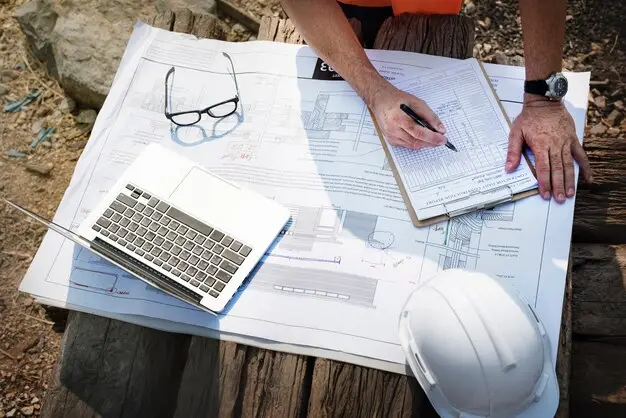
Construction estimating is an essential and crucial process in the construction business. Accuracy and precision are the fundamental pillars of a good estimation.
Complete Guide to Hard Costs and Soft Costs

Complete Guide to Hard Costs and Soft Costs
December 24, 2024
Cost estimation is a crucial step in construction. Precise cost estimation can help complete the project on time with a significant profit, while wrong cost estimation can spoil the project. So, it is essential to estimate the cost of a project accurately. In construction, there are two types of expenses: hard and soft. Usually, hard costs are visible and easily calculated, while soft expenses are hidden and hard to calculate accurately.
This blog will discuss the hard and soft costs in detail. So, Let’s start.
Key Takeaways
- Hard costs are the apparent costs that are linked directly with the project construction such as materials, labor and equipment cost.
- Soft costs are not directly linked with the construction but affect the budgeting for a construction project such as administration, real estate cost.
- Hard costs are easy to calculate with good market research and vary due to the project size, complexity and market prices of the materials.
- Soft costs are hard to calculate. However, a fair amount should be placed in the estimation report for soft cost to avoid any inconvenience due to shortage of budget.
- For a successful completion of the project, both costs should be estimated properly.
What Are the Differences Between Hard Costs and Soft Costs?
Hard costs, also known as “brick and mortar,” are tangible, physical costs that are directly linked with the construction process of the building—for example, the cost of material, labor, and equipment.
Soft costs are not directly linked with the construction process but still play a crucial role in the project’s overall cost. For example, administration costs, permits and inspection costs, etc.
It is the main difference between hard cost vs soft cost. Let’s discuss both types of costs in detail.
What is a Hard Cost?
Hard cost is a physical cost that is associated with the project from the start and remains until the end. These costs make up 70% of a project budget. They are fixed costs that can be easily calculated with the right market research. These costs only change when the scope of the project changes.
Types of Hard Costs
Various types of hard costs are
- Raw materials
- Construction labor
- Equipment
- Interior fixtures
Raw Material
Raw materials are the physical materials that are linked with the construction process of the building. For example, concrete, bricks, glass, framing, and facade materials. Raw material quality is directly proportional to the project’s success, and the cost is affected by the quality of the material you choose. Inflation rate and construction market fluctuation can affect the prices of raw materials. That’s why proper market research is necessary to calculate the accurate prices of raw materials.
Construction Labor
These are the labor costs required to work on the site and complete the project on time. The labor cost depends upon the project’s size and complexity. Larger projects require more labor, and complex projects require experienced labor. Calculating the total labor cost for the whole project is crucial because each construction project is divided into various sub-projects, such as HVAC, electrical installation, and water management systems. All sub-projects require different expertise and have varying market prices of labor.
Equipment
All the machinery and equipment used for the project’s construction are included in the equipment cost. Most construction estimating service firms have their own equipment, while others have to rent. Moreover, equipment maintenance costs are also included, which are essential for the crew working on the project. Heavy machinery rents and safety equipment are included in this hard cost.
Interior Fixtures
The permanent elements of the interior designs are the hard costs because they are necessary for the project’s completion. Interior fixtures include kitchen cabinets, tiles, facade and steel materials, counters, paints, hardware, furnaces, and pipes.
Estimating Hard Cost
Estimating the hard cost is an essential step for completing the project. Following are the steps to estimate hard costs for a project
- The first step is to analyze the project scope (size, complexity)
- Break the project into small sub-projects such as HVAC, electrical installation, etc.
- Menton, here are the materials required to complete the projects.
- Perform market research to calculate the current market prices for the materials, labor cost, machinery rents, and interior fixtures cost
- Now, calculate the estimated hard cost for the project.
- You can also use the latest cost estimation software to calculate precise and accurate costs.
Conclusion
Hard costs are directly related to the construction process, such as the cost of material, labor, and equipment, while soft costs are not directly linked with the construction process but affect the overall cost of the project, such as administration, designs, property management, and real estate. Hard costs are easy to estimate with proper market research and analysis of the project scope. The cost only varies if the scope of the project changes. Soft costs are hard to estimate but impact the project’s budgeting. Therefore, constructors and estimators should keep a fair estimation of the soft cost of the project that seems fair to the lender and the constructor.
Related Posts
Complete Guide to Hard Costs and Soft Costs
December 24, 2024
Cost estimation is a crucial step in construction. Precise cost estimation can help complete the project on time with a significant profit, while wrong cost estimation can spoil the project.

Trust Us For Expert Estimating Services & Win Every Bid
Maximize your budget and minimize surprises with our expert services. Building your dreams doesn’t have to break the bank. Let us help with accurate estimates!
We believe precision is key in construction projects. Get accurate estimates, every time. Contact us now.